Lab equipment
RPM or RCF? Setting a laboratory centrifuge correctly
Two centrifuges at the same RPM can spin samples with very different force. How to convert between RPM and g, and a few habits for safe, consistent runs.
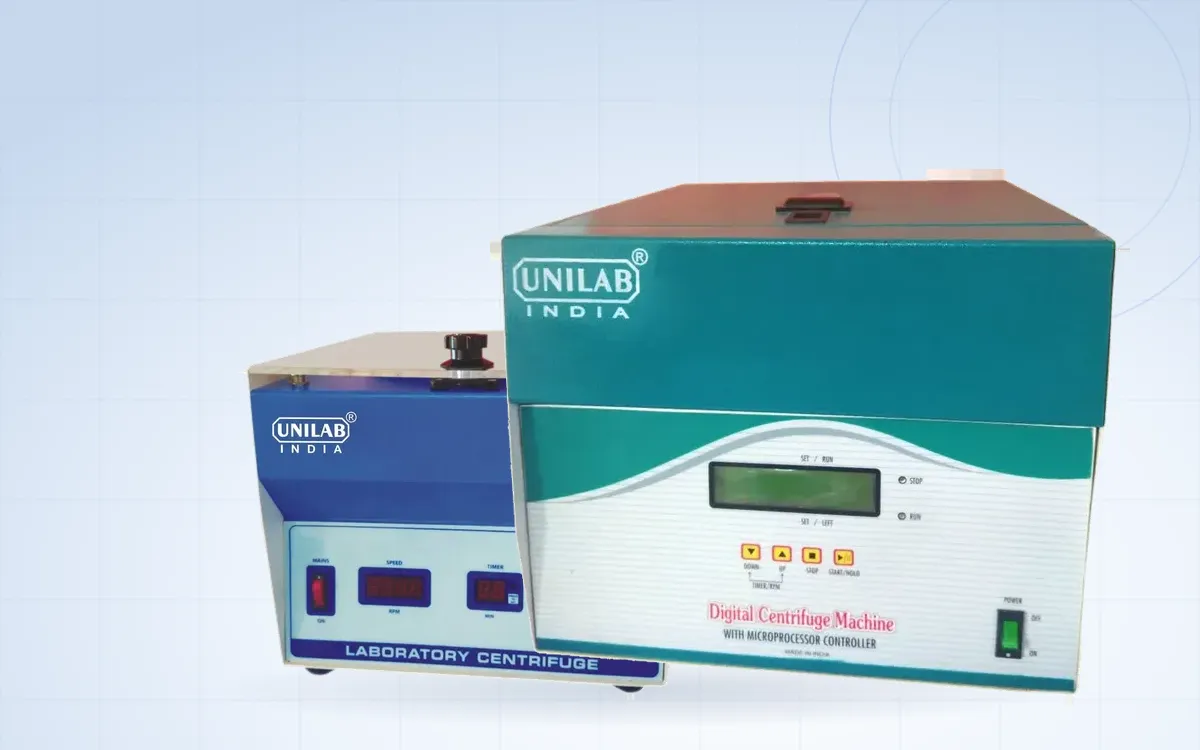
Protocols and tube manufacturers usually state a centrifugation step in g, for example "10 minutes at 1,000 g". Most bench centrifuges are set in revolutions per minute. The two are related, but not the same thing, and mixing them up is one of the most common reasons for poorly separated samples.
What the numbers mean
RPM is how fast the rotor turns.
RCF, relative centrifugal force, is the force the sample actually experiences, expressed as a multiple of gravity (g). It depends on speed and on how far the sample is from the centre of the rotor. A tube at the edge of a large rotor feels much more force than a tube near the centre of a small one, at the same RPM.
The conversion
RCF = 1.118 × 10⁻⁵ × r × RPM²
where r is the radius in centimetres, measured from the centre of the rotor to the bottom of the tube.
Two examples at 3,000 RPM:
- With a radius of 10 cm: 1.118 × 10⁻⁵ × 10 × 3,000² ≈ 1,006 g
- With a radius of 15 cm: 1.118 × 10⁻⁵ × 15 × 3,000² ≈ 1,509 g
Same speed, half as much force again. If a protocol is written in g, calculate the RPM for your own rotor rather than copying an RPM value from another lab.
To go the other way:
RPM = √(RCF ÷ (1.118 × 10⁻⁵ × r))
Angle rotors and swing-out rotors
In an angle rotor, tubes sit at a fixed angle. Runs are quick and the rotor is compact. In a swing-out rotor, the buckets swing out to horizontal as the rotor turns, so the sediment forms a flat layer at the bottom of the tube. Tube and gel-separator manufacturers often give different times for the two rotor types. Check their instructions.
Habits for every run
- Balance the load. Place tubes of equal weight opposite each other. If you have an odd number of samples, add a balance tube filled with water to the same level.
- Use the right tubes. Only use tubes rated for the speed and the rotor.
- Close the lid before starting and wait for the rotor to stop completely before opening. Machines with a lid interlock and imbalance detection stop automatically if something is wrong. Do not work around them.
- Use the timer. Consistent time and speed give consistent separation from one batch to the next.
- Clean spills promptly and follow your laboratory's procedure for biological material. Many rotors can be autoclaved; check the manual first.
Choosing a centrifuge
Consider the tube sizes you use, how many samples you spin at once, the maximum force your protocols need, and the noise level in the room. A microprocessor-controlled speed setting with a digital display makes it easy to repeat the same run every time.
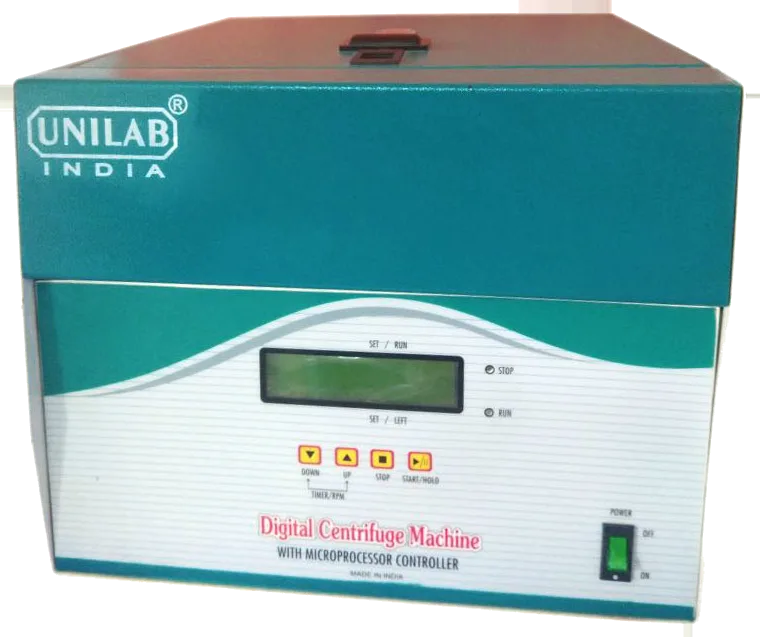
Digital Angle-Rotor Centrifuge
For separating Serum from blood or for urine sedimentation.
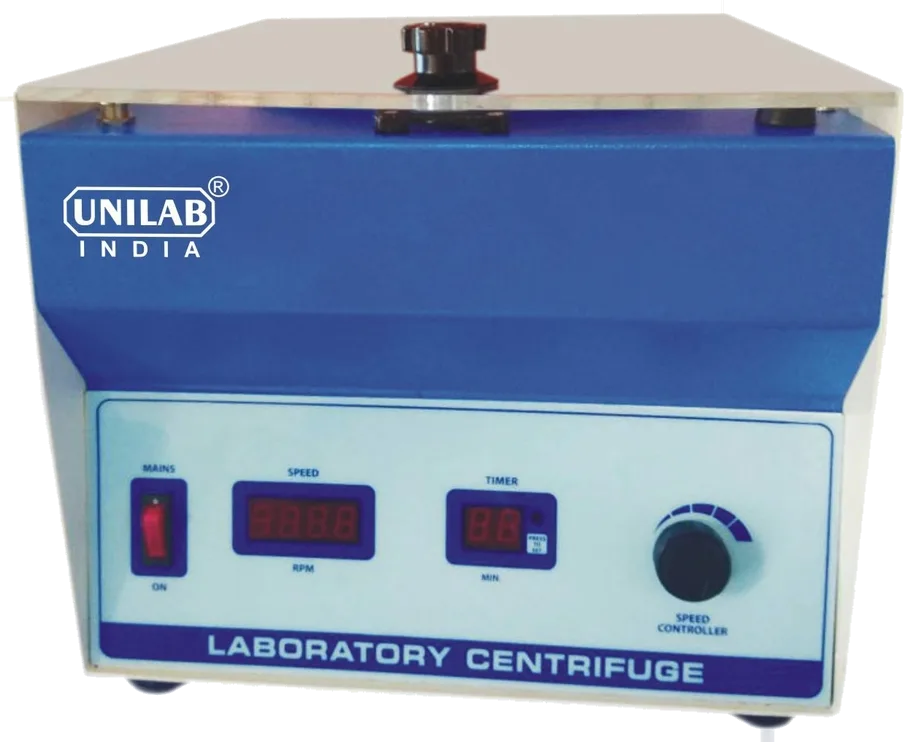
Laboratory Centrifuge, 12 x 15 ml
For separating Serum from blood or for urine sedimentation.
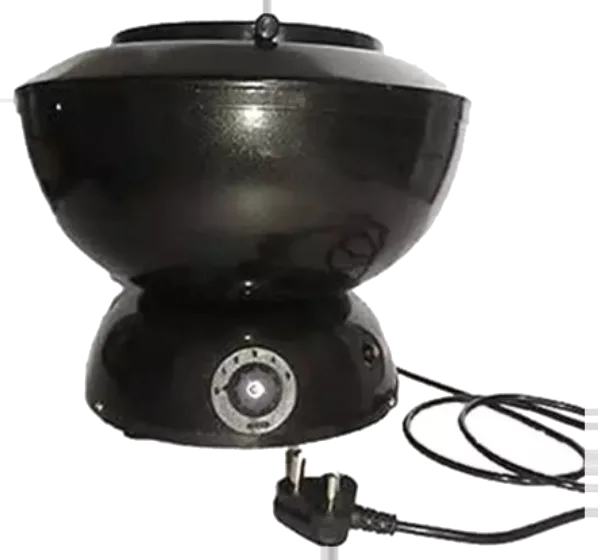
Medical Centrifuge, 8 x 15 ml
For separating Serum from blood or for urine sedimentation.