Care & maintenance
A simple care routine that keeps a microscope working for years
Dust, immersion oil and humidity cause most microscope problems. A few habits at the end of each session prevent nearly all of them.
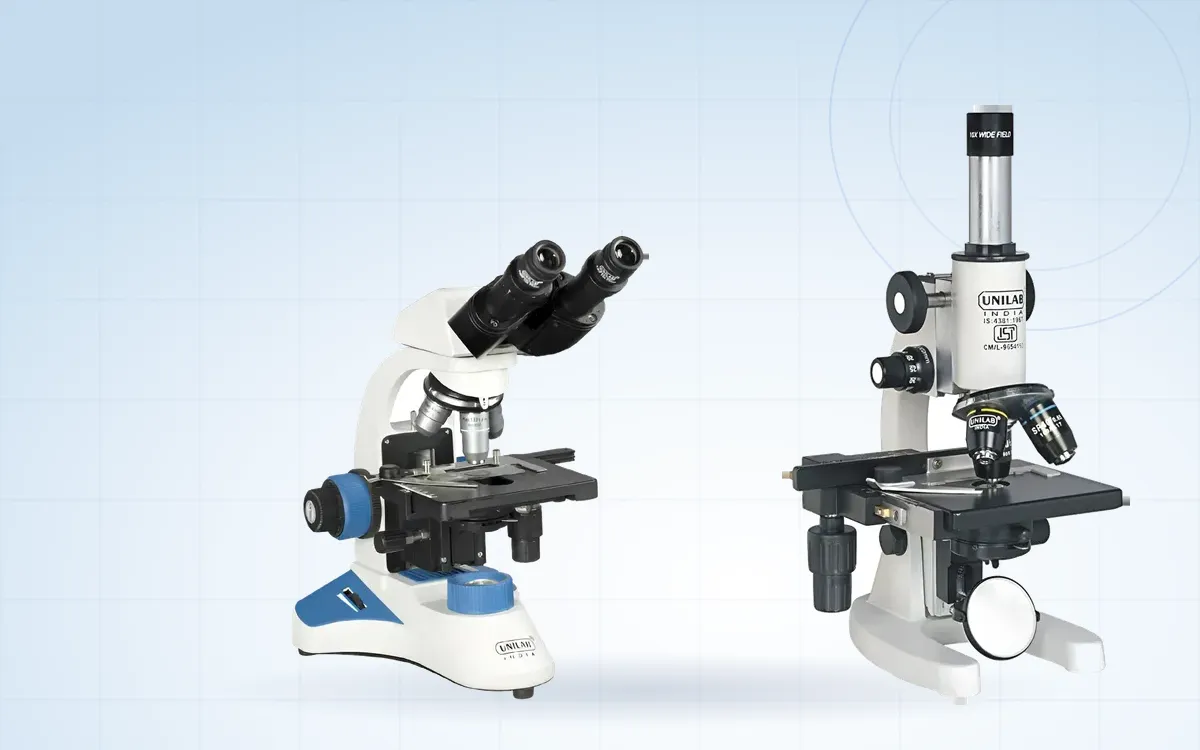
Microscopes are built to last, but they do not look after themselves. When an instrument comes back for service, the cause is rarely a broken part. It is usually dried oil on a lens, fungus inside an objective, or a focus mechanism that was forced. All three are avoidable.
At the end of every session
- Turn the light down, then switch off. Bringing the brightness to minimum before switching off is kinder to the lamp and avoids a bright flash for the next user.
- Clean the 100x objective. If you used immersion oil, wipe it off the objective straight away with clean lens tissue. Do the same for the slide area of the stage.
- Lower the stage and rotate to the lowest power objective. This keeps the objectives away from the stage and makes the next set-up easier.
- Cover it. A dust cover is the cheapest protection you can buy. Dust on the eyepieces and in the head slowly turns into a hazy image.
Cleaning lenses properly
Use lens tissue, not paper towels, cloth or cotton wool, which can scratch coatings or leave fibres. Blow loose dust away first with a hand blower. Then moisten a fresh piece of lens tissue with a small amount of lens cleaning solution and wipe in a gentle spiral from the centre outwards. Never pour liquid directly onto a lens, and never take an objective apart to clean the inside.
If you are not sure whether dirt is on the eyepiece or deeper in the microscope, rotate the eyepiece while looking through it. If the spot turns with it, the eyepiece is the place to clean.
Humidity and fungus
In humid weather, especially during the monsoon, fungus can grow on glass surfaces inside objectives and prisms. Once it etches the coating it cannot be fully removed. To reduce the risk:
- Keep the microscope in a dry, well-ventilated room, ideally with air conditioning or a dehumidifier.
- Store spare objectives and eyepieces in closed containers with silica gel, and replace or dry the gel when it changes colour.
- Do not leave the microscope sealed in its box for months in a damp store room.
Handling and moving
Carry the microscope with one hand on the arm and the other under the base. Keep it upright. Never lift it by the stage, the head or the focus knobs.
If a focus knob feels stiff, stop. Do not force it. Check that the stage is not touching the condenser or a slide holder, and contact your supplier if it stays tight.
Once or twice a year
Have the instrument checked and cleaned by someone who services microscopes. This usually includes cleaning the internal optics, relubricating the focus and stage mechanisms, and checking the electrical parts. A small amount of regular attention costs far less than replacing an objective.
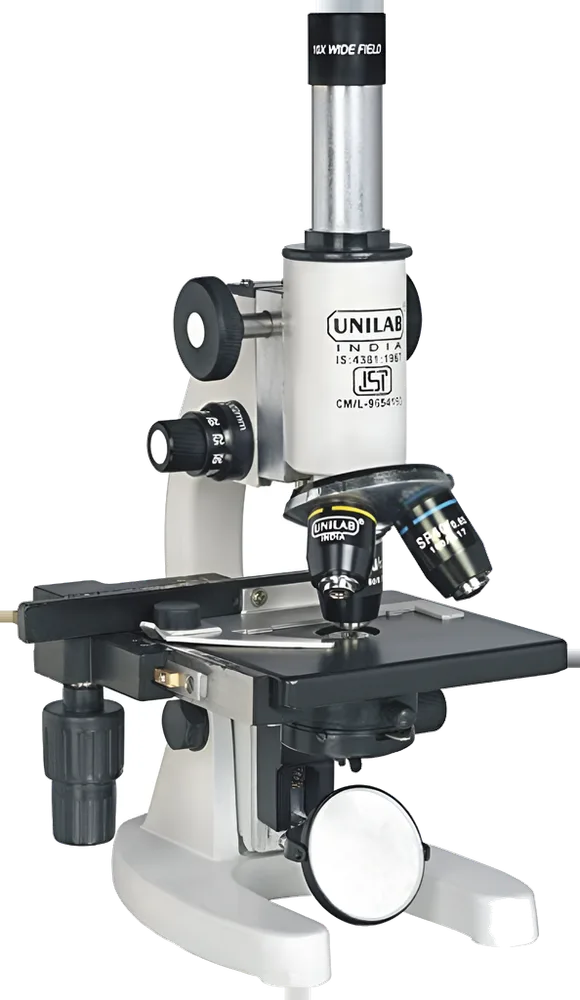
Pathological Medical Microscope
Used for detailed examination of cells and tissues in medical diagnosis.
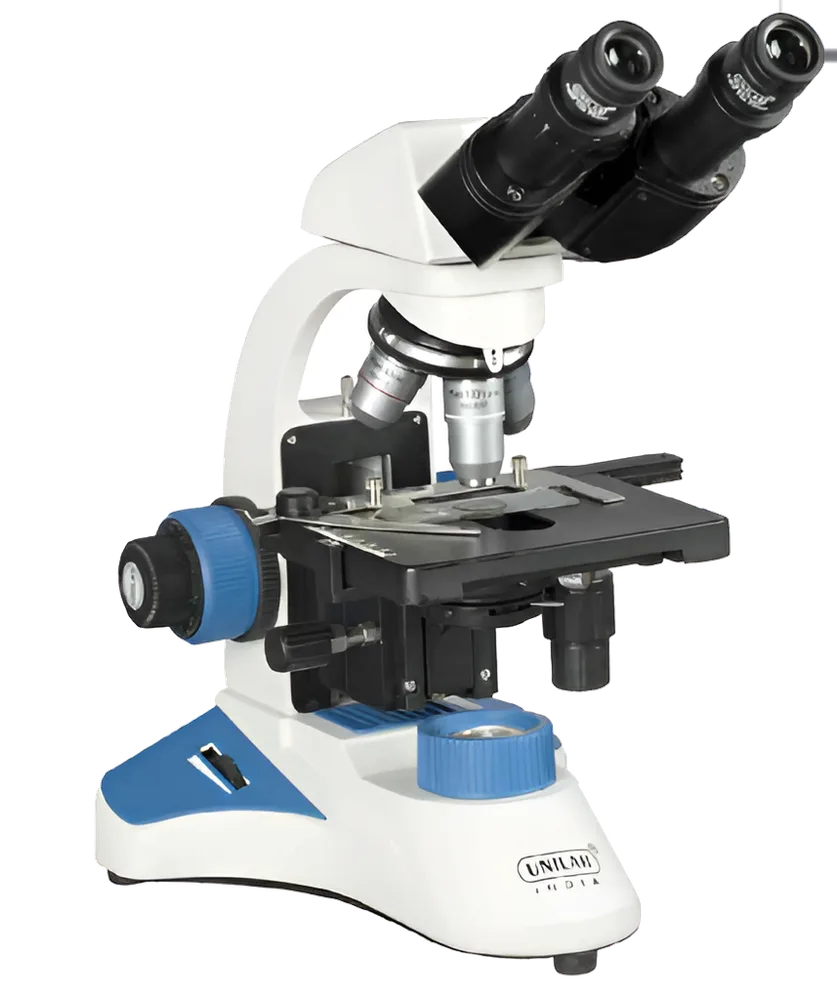
Binocular Research Microscope
Used for high-precision microscopic examination in research and laboratory applications.
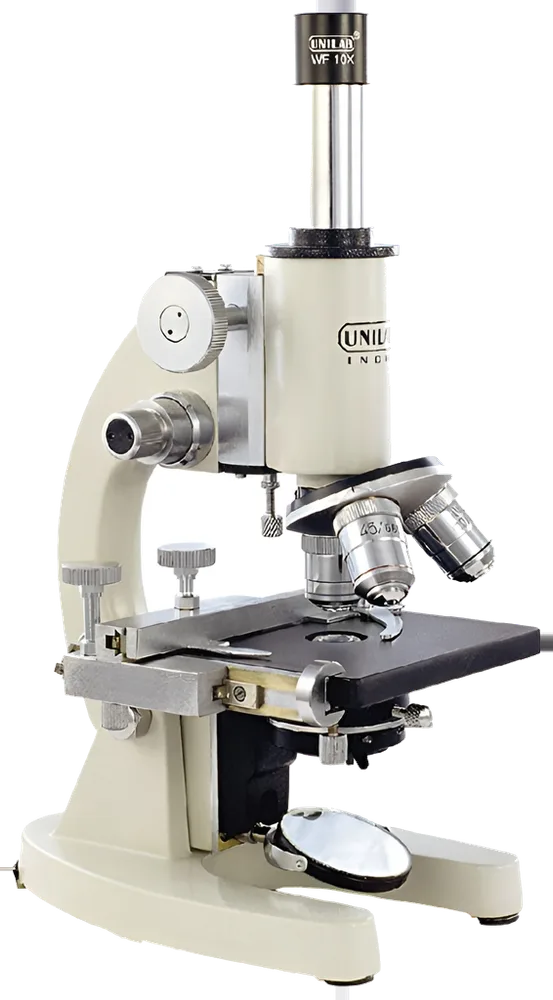
Student Microscope
Used for fundamental biological observation and learning in schools and student laboratories.