Buying guide
Stereo or compound microscope? What each one is for
One gives a three-dimensional view of whole objects at low power. The other looks through thin specimens at high power. Choosing between them starts with the sample.
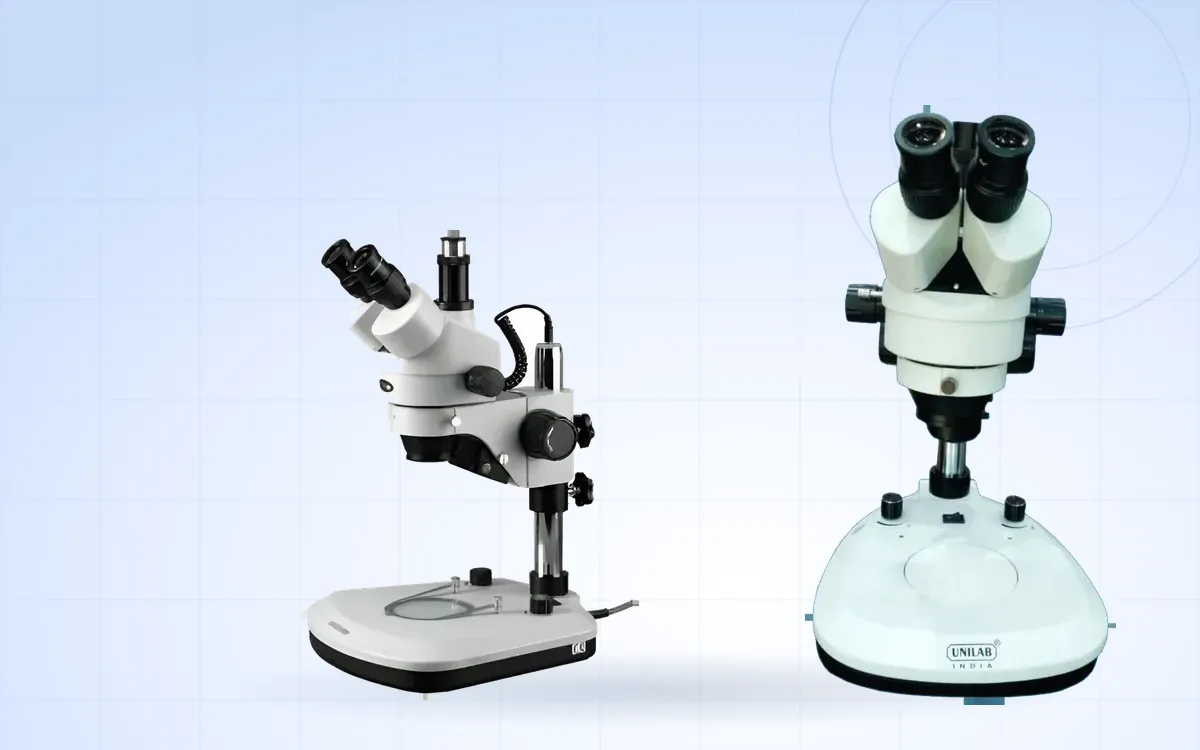
"Which microscope should we buy?" often has a simple first answer: it depends on whether you need to see through the specimen or look at its surface.
The compound microscope
A compound microscope uses two stages of magnification, the objective close to the specimen and the eyepiece you look into. Typical total magnifications run from 40x to 1000x.
Light usually comes from below and passes through the specimen. That means the specimen must be thin and mostly transparent: a stained tissue section, a blood smear, a drop of pond water, cells in a culture. The image is flat, and only a very thin layer is in focus at a time.
Use a compound microscope for:
- Pathology and histology slides
- Haematology and microbiology
- Cell biology and teaching practicals with prepared slides
The stereo microscope
A stereo microscope has two separate optical paths, one for each eye, viewing the object from slightly different angles. Your brain combines them into a three-dimensional image. Magnification is lower, typically somewhere between about 7x and 45x, and there is plenty of space between the lens and the object.
Light can come from above, from below, or both, so solid and opaque objects can be examined. Zoom models change magnification smoothly without switching lenses.
Use a stereo microscope for:
- Dissection in biology and zoology classes
- Insects, seeds, plant structures and other whole specimens
- Inspecting components, surfaces, welds and small assemblies
- Sorting and picking under magnification, where you need room to work with tools
Side by side
| Compound | Stereo | |
|---|---|---|
| Typical magnification | 40x to 1000x | about 7x to 45x |
| Image | Flat, very shallow focus | Three-dimensional |
| Specimen | Thin, transparent slides | Whole, thick or opaque objects |
| Working distance | Very short | Long, room for tools |
| Typical use | Pathology, microbiology, cell biology | Dissection, inspection, entomology |
Many labs need both
A biology department usually needs compound microscopes for slides and stereo microscopes for dissection. A pathology lab may use a stereo microscope at the grossing bench and compound microscopes for reporting. If both kinds of work happen in your lab, plan for both rather than stretching one instrument to cover everything.
Trinocular versions of both types are available when you need to photograph what you see.
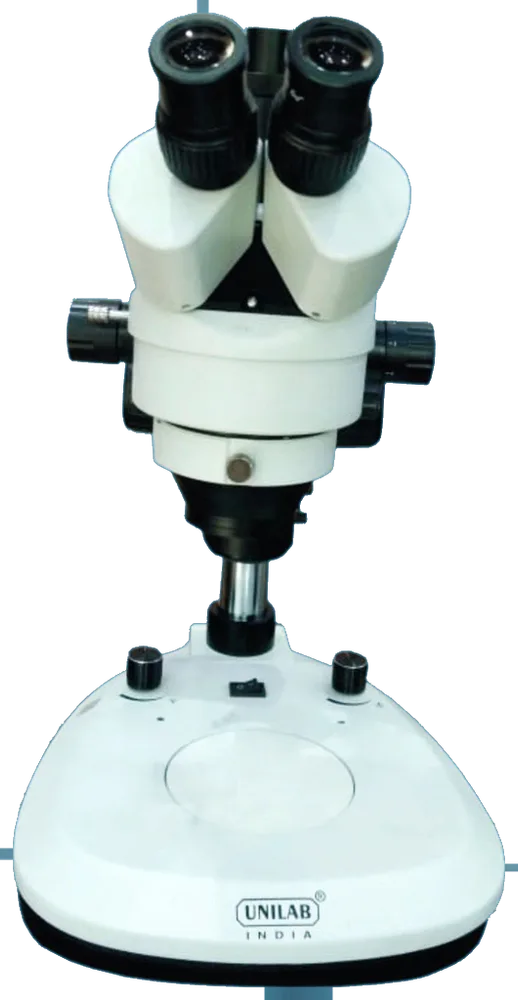
Stereo Microscope
Used to view 3D details of small objects.
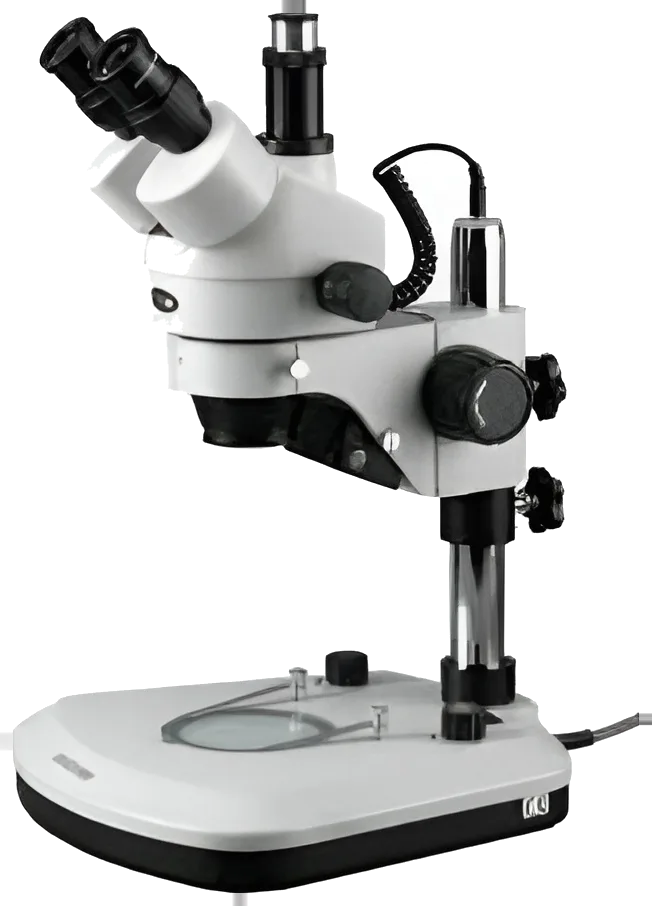
Stereo Zoom Trinocular Microscope
Used for high-clarity 3D viewing and detailed inspection of small samples in research.
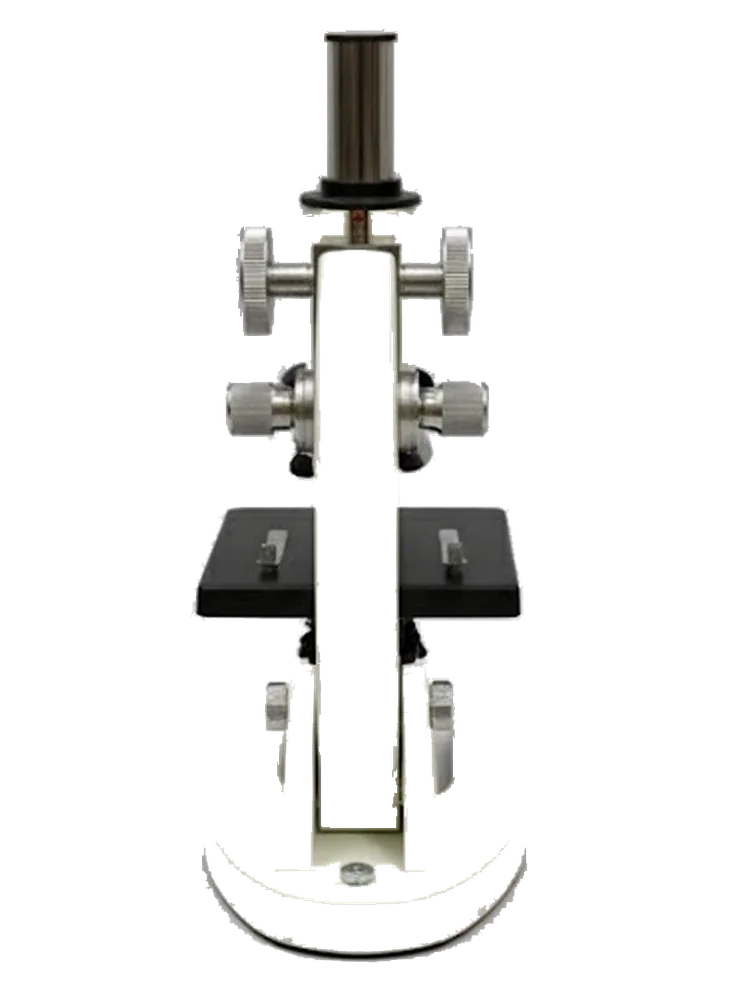
Student Microscope
Used for basic microscopic observation and learning in schools and labs.